


A derivation and interpretation of the fine structure constant
- Warren Frisina

- Jul 25, 2021
- 1 min read
Updated: Jul 28, 2021
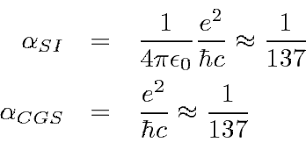
The fine structure constant, symbolized by the Greek letter alpha, is central to physics beyond it's definition as the velocity of the electron in the first Bohr orbit of the hydrogen atom divided by the speed of light -- (v sub-1) /c. As indicated in the illustration, it relates quantum theory (h), relativity (c) and electromagnetism (e), suggesting the possibility of a unification of physics. Here is an alternate derivation:
It has been shown* that:
electron mass, (m sub-e)^3 = k^2(H/G)(e/c)^4
sub-proton mass, (m sub-x)^3 = (H/G)(h/c)^2;
then, dividing the first equation by the second,
[(me)/(mx)]^3/2 = ke^2 / hc = alpha/(2pi),
where mx is proposed constituent quark of 46 Mev (order of magnitude larger than current (bare) light quark), suggesting certain attached gluons. H in the equations is the Hubble parameter in proposed acceleration units, and approximately 8.5*10^-14 m/s^2.* Then the fine structure constant might be interpreted as a ratio of the principal matter particles under a certain condition.


Comments